

Why are Casting Directors in Nairobi clicking off your Self tape so fast as a serious Actor

Why most Self tapes fail in the first 10 seconds and how to fix it fast

You hit record. You deliver the lines. You even feel good about it. Then, silence. No callback. No feedback. Just another self tape disappearing into the void. If you are an actor in Kenya or anywhere in today’s global casting market, you have probably asked yourself: “Why do casting directors stop watching my self tape?” Here is the truth most actors do not hear: Your self tape is being judged before your performance even begins. That is not your fault but it is your responsibility to fix it.
The 10 second reality most Actors ignore
A Nairobi based actor once told me: “I rehearse for hours but I feel like they reject me before I even speak.” He was not wrong. Casting directors, whether on platforms like Casting Networks, Backstage or local Kenyan casting calls are reviewing hundreds of tapes. They do not have time to “wait and see.” They decide quickly. Emotionally. Instinctively. Not because they are unfair but because they are trained to spot confidence, clarity and presence immediately. That means your first 10 seconds must do one thing: Make them lean in, not click away.
What is actually happening in those first 10 seconds
Let us break the silent checklist happening in a casting director’s mind:
. “Do they look professional?”
. “Can I hear them clearly?”
. “Do they feel natural on camera?”
. “Do I believe them yet?”
If the answer is “no” to even one of these, your self tape is already in danger. This is where most actors lose roles, not because they lack talent but because their presentation kills their performance before it starts.
The hidden problem: Talent is not the first thing they see
Here is the uncomfortable truth: Actors think casting is about acting. Casting directors know it starts with watchability. Just before your emotional depth, before your character choices. They are reacting to:
. Lighting.
. Framing.
. Eyeline.
. Sound.
. Energy.
This is why two actors with equal talent can get completely different results. One looks like a professional. The other looks like they are “trying.” In a fast moving industry, even in emerging markets like ours Kenya, that difference is everything.
Just before:
. You hit record unsure of your setup.
. You adjust your eyeline mid scene.
. Your audio is slightly off.
. Your energy builds too late.
Result: They stop watching.
After:
. You enter frame already grounded.
. Your eyeline pulls them into the story.
. Your voice is clear, controlled, intentional.
. Your presence is immediate
Result: They keep watching and start imagining you in the role.
That is the shift. Not more talent. Better self tape strategy.
The 3 reasons most Self Tapes fail instantly
1. Weak first frame = Weak first impression
Your opening visual matters more than you think. If your lighting is harsh, your framing is off or your background distracts, you are signaling “amateur” before you even speak.
Lesson:
Casting directors trust what they see instantly.
Action:
Fix your lighting and framing before you fix your acting.
2. Unclear eyeline = Broken connection
If you are looking directly into the camera or too far off, it breaks the illusion. The performance feels staged, not lived.
Problem:
You think you are acting. They feel like you are performing at them.
Solution:
Your eyeline should feel like a real human connection, not a guess.
3. Delayed energy = Lost attention
Many actors “ease into” the scene. Casting directors do not wait.
Example:
If your first line lacks intention, they assume the entire performance will.
Lesson:
You must arrive in the scene already alive.
You do not need better acting first. You need better entry points into your acting.
That means:
. Strong visual setup.
. Immediate emotional clarity.
. Controlled, camera aware delivery.
This is why some actors book consistently even without being the “best actor in the room.” They understand the game.
Why this matters right now more than ever
Self tapes are no longer optional. They are the industry standard, from Nairobi to London to Los Angeles. With remote casting rising, you are no longer competing locally. You are competing globally. That means your self tape must:
. Look professional.
. Feel cinematic.
. Capture attention instantly.
If it does not, someone else’s will.
The system that makes Casting Directors keep watching
This is where most actors get stuck: They know something is wrong but they do not know what to fix first.
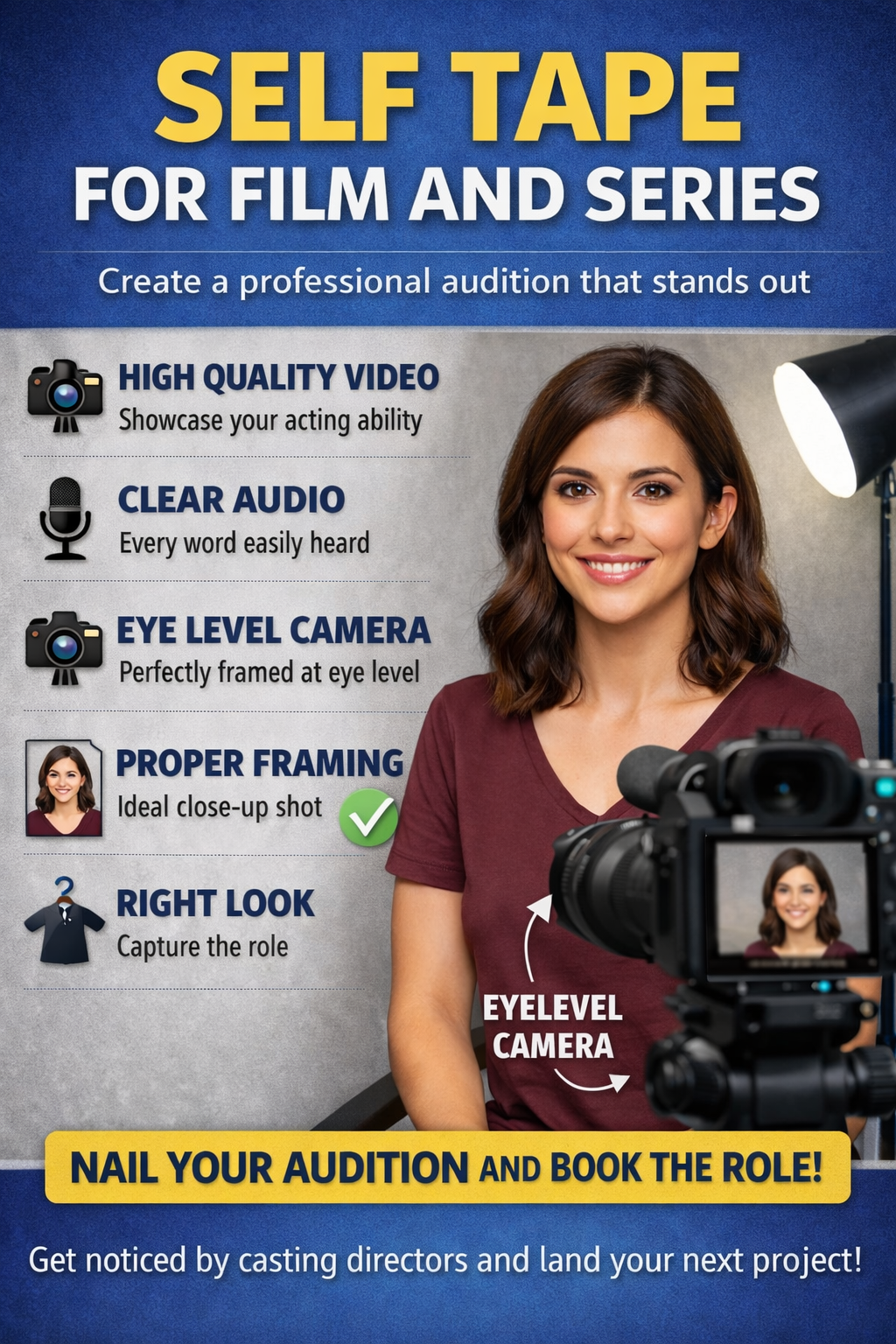
A repeatable system that helps you:
. Set up lighting that flatters your face instantly.
. Frame your shot like a director, not a guess.
. Fix your eyeline for real emotional connection.
. Improve your sound, even without expensive gear.
. Deliver performances that feel natural on camera.
Most importantly, walk into every self tape knowing you will not lose them in the first 10 seconds.
3 step action plan you can use today
If you do nothing else, start here:
Step 1: Fix your first frame
Record yourself entering the scene.
Ask:
Would I watch this?
If not, adjust lighting, framing and posture.
Step 2: Lock your eyeline
Choose a specific point just off camera.
Commit to it.
Do do not drift.
Step 3: Start with intention
Do not “warm up” into the scene.
Begin like something already happened.
The future version of you
Imagine this: You submit a Self tape and instead of anxiety, you feel certainty.
You know:
. Your setup works.
. Your performance connects.
. Your presence is undeniable.
That is when casting directors stop scrolling. That is when they re-watch. That is when you start booking.
Final thought from someone who understands the room
You are not being rejected because you are not talented. You are being overlooked because your self tape is not giving your talent a fair chance. Fix that and everything changes.
If you are tired of guessing and ready to make your self tapes look, sound and feel like they came from a professional setup.
Take a look at the Self Tape for Film and Series PDF.
It is not just a guide. It is the system that helps casting directors keep watching you.

Comments