

I thought Vertical Drama was just a trend - Then I saw what it could mean for Actors in Nairobi

Updated: 2 days ago
If you are wondering whether Vertical Drama is worth your time - You are not alone

The Vertical Drama boom and why Actors feel they might be missing something
What Is Vertical Drama Acting?
Vertical drama acting is performance designed for mobile first scripted series filmed primarily in a 9:16 portrait format. Unlike traditional television or film, vertical dramas often demand faster emotional pacing, strong close-up presence, immediate audience engagement and performances that remain clear on a smartphone screen.
For actors, the opportunity is exciting but it also raises important questions:
- How do you act differently in a vertical drama?
- Should you accept a vertical drama role?
- Are micro drama auditions good for your acting career?
- Can beginner actors find opportunities in this growing format?
- Will AI generated performers eventually compete with human actors?
The short answer? Vertical drama is creating real opportunities but actors need strategy, not blind FOMO.
That is where the conversation gets interesting.
“Wait… Are we all sbout to miss something?”
Imagine this. You are scrolling through your phone late at night.
A dramatic clip appears.
A woman opens a door, she freezes, a man looks at her, three seconds later, you understand everything.
Someone has betrayed someone, someone is in danger, someone is about to fall in love with the wrong person and before your brain has even had time to say, “This is ridiculous,” your thumb has stopped scrolling.
Welcome to the strange, fast moving world of vertical dramas.
Also called micro dramas, short dramas or vertical series, these productions are built specifically for mobile viewing. Episodes can be extremely short, stories move quickly and the portrait frame puts actors much closer to the audience than traditional widescreen storytelling. Platforms such as ReelShort, DramaBox, Vigloo, DramaWave and GoodShort have helped turn the format into a rapidly expanding part of the entertainment business.
Actors everywhere from Los Angeles to London to Nairobi are beginning to ask the same uncomfortable question: “If this is becoming a new casting market why am I still preparing only for the old one?”
That question is not about panic. It is about awareness.
Acting careers have always changed with technology.
Radio created new performers, television changed screen acting, streaming changed audition systems, self tapes changed access.
Now mobile first storytelling is creating another shift.
The actors who succeed are not necessarily the ones who chase every trend.
They are the ones who understand which changes affect their opportunities and adapt intelligently.
The Me Too moment: I Understand why Actors feel skeptical
Let me say something that many actors are probably thinking.
When you first hear about vertical dramas, you might roll your eyes.
I understand. You may see titles that sound wildly dramatic.
You may wonder whether the work is “serious acting.”
You may ask whether appearing in a micro drama will actually help your career.
You may even think: “I've spent years learning acting. Am I now supposed to scream into a phone for 60 seconds?”»
Fair question. Very fair.
Here is the mistake actors sometimes make when a new format appears: We judge the opportunity before understanding the format.
Vertical drama does not automatically replace television. It does not automatically replace cinema.
It certainly does not mean every vertical drama project is a career changing opportunity but dismissing an entire growing format without understanding it can be just as risky as chasing it blindly.
Recent casting coverage shows the space becoming increasingly professionalized, with dedicated casting infrastructure, specialized audition expectations and studios actively looking for performers who understand the 9:16 format.
That means the real question is not: “Is vertical drama good or bad?”
The better question is: “How can I understand this format well enough to make smart career decisions?”
That is a very different mindset and it is the mindset of a working actor.

Why Vertical Drama is suddenly everywhere
The rise of vertical storytelling makes sense when you look at how people consume entertainment.
The smartphone is no longer simply where audiences discover trailers. It is where they watch stories.
People watch during lunch breaks, on buses, while waiting for appointments or late at night in bed.
During those tiny gaps in life when traditional two hour movies simply do not fit.
Vertical drama was designed around that behaviour.
Instead of asking the audience to sit down for entertainment, it brings entertainment into the audience's existing habits.
That changes storytelling and when storytelling changes, acting changes with it.
A vertical series is not simply a normal television show cropped sideways.
The portrait frame changes composition. The actor's face occupies more of the visual experience. Eye movements become more noticeable. Small reactions become easier to see and because the audience can leave with one swipe, stories often need to establish emotional stakes quickly. Industry discussions around vertical production increasingly describe the format as a distinct creative language rather than simply shortened television.
Think about that for a second.
In traditional acting, you might have time.
Time to enter, to establish the relationship or time to let the audience discover what is happening.
In a fast moving micro drama? Sometimes the audience needs to understand:
. Who you are.
. What you want.
. What is at risk.
. Why they should care almost immediately.
That does not mean “overact.” It means communicate clearly.
There is a difference and that difference may become one of the most valuable skills for actors entering this space.
The new opportunity nobody explained to Actors
Here is where the curiosity becomes financially interesting.
Traditional acting careers can feel painfully slow.
You train, get headshots, submit, wait.
You self tape, wait again.
Sometimes you hear nothing, sometimes you get a callback, sometimes you book, sometimes months pass.
Vertical drama operates on a different production rhythm.
The format's demand for frequent episodes and rapid content output has created a need for actors who can learn quickly, work efficiently and deliver emotionally clear performances under tight schedules. Dedicated vertical drama casting resources now emphasize format specific skills and faster production cycles.
For emerging actors, that creates something extremely valuable: More possible entry points.
Not guarantees, entry points and those two things are not the same.
A casting opportunity does not promise fame.
A vertical drama role does not automatically build a career but professional experience, footage, relationships and practical set discipline can all become useful assets depending on the quality of the project and the terms involved.
That is why I want actors to avoid two extremes.
Extreme one: “This is definitely the future. I must drop everything.”
Dangerous.
Extreme two: “This is not traditional film, So it does not matter.”
Also dangerous.
The smartest position is somewhere in the middle: Learn the format. Study the opportunities. Understand the contracts. Improve the relevant skills. Then make decisions strategically.
That is what career longevity looks like.
Not chasing everything. Not rejecting everything.
Understanding enough to choose.
Why your Self tape suddenly matters even more
Here is where this conversation becomes deeply connected to Self Tape Audition.
For many actors, the first contact with a vertical production may happen through a Self tape.
Here is the twist: Your traditional self tape habits may not automatically translate.
Vertical productions may ask actors to work within a 9:16 frame, communicate emotional stakes quickly and create strong close-up connection. Current vertical drama casting guidance specifically highlights close-up presence, emotional intensity and format awareness as important parts of the process.
That means you need to understand more than: “Where should I put my camera?”
You may need to ask:
- Does my performance read clearly on a phone screen?
- Am I using my eyes effectively?
- Is my framing helping or distracting?
- Can the audience understand my emotional state quickly?
- Am I rushing because the format is fast?
- Am I becoming artificial because I think everything needs to be intense?
That last question is especially important because fast pacing does not mean fake acting.
A dramatic situation can be heightened while your emotional response remains truthful.
That is acting and that is where beginners and experienced actors alike can develop an advantage.

A quick reality check about AI and human Actors
Of course, no conversation about new entertainment formats would be complete without mentioning AI.
AI assisted production is entering short-form content rapidly and concerns about AI generated or replicated performers are becoming more serious. Recent reporting has highlighted both the growing use of AI in short-form production and the employment, consent and compensation concerns surrounding digital replicas.
That can sound frightening but here is the part actors should pay attention to: Technology makes generic content easier to produce. Human specificity becomes more valuable.
A human actor brings lived behaviour, unexpected reactions, chemistry, timing, listening and contradiction.
The strange little pauses that no one writes into a prompt.
Your job is not to pretend technology is not changing. Your job is to become harder to replace by developing what makes performance unmistakably human.
That means improving:
- Emotional specificity
- Listening
- Camera awareness
- Character imagination
- Adaptability
- Professional discipline
Those skills matter in traditional film, matter in streaming and they matter in vertical drama.
The format may change. The need for truthful human behaviour does not disappear.
The first lesson: Do not wait for permission to understand the next format
The biggest opportunity right now may not be booking a vertical drama tomorrow.
It may be something more important.
Understanding the language before everyone else does.
Actors often wait for an agent to tell them what matters or a casting director, or an acting school, even social media but your career becomes more powerful when you develop your own industry awareness.
Study new formats, watch what casting professionals request, notice how audiences consume stories, test your self tapes, learn the technical language, then decide what belongs in your strategy.
The actor who understands a changing industry has more choices than the actor who only reacts when change arrives.
Vertical drama is forcing an interesting question: What if the next breakthrough opportunity does not arrive through the audition system you already know?
In Part 2, we go deeper into the craft itself: How do you actually act for vertical drama without becoming exaggerated, rushed or artificial?
We will explore:
- Portrait frame performance
- Faster emotional pacing
- Micro-expressions
- Camera proximity
- The difference between “intensity” and “overacting”
- How to adapt your self tape for mobile first casting.
Understanding the opportunity is only step one. Knowing how to perform inside it is where the real advantage begins.
How to actually act for Vertical Drama — Without looking like you are acting for TikTok
The biggest misunderstanding about Vertical Drama acting.
Here is where many actors may get the new format wrong. They hear vertical drama, micro drama or short form series and immediately assume: “The acting must be bigger.” Not necessarily.
The screen may be smaller, storytelling may be faster, episodes may be shorter but the emotional truth still has to feel real.
In fact, viewers are watching on a phone, often with their faces physically close to the screen, small performance choices can become even more visible.
A forced reaction can feel forced, a fake tear can feel obvious, a generic line reading can disappear instantly.
This is where vertical drama acting creates an interesting challenge for actors in Nairobi, London, Los Angeles and everywhere in between: You need speed without losing truth.
That is the new skill.

Vertical Drama acting requires faster emotional pacing
Traditional film and television often give actors more time.
A scene might slowly build. A relationship might develop across several episodes. Silence might carry meaning.
Vertical drama often works differently.
The audience is being asked to stay, keep watching, tap to the next episode.
So scenes frequently move through emotional shifts much faster.
A character may go from:
. Suspicion
. To shock
. To betrayal
. To anger
. To a decision
Within a very short amount of screen time.
That does not mean you should rush your acting. It means your character work needs to be clearer.
The actor's question changes from: “How can I make this emotional?” To: “What changes inside my character and exactly when?”
That distinction matters.
A strong vertical drama performance often depends on the actor understanding the emotional turning points of a scene before the camera starts rolling.
The 5 emotional skills Vertical Drama Actors need
1. Faster emotional recognition
The audience needs to understand what has changed.
Not through exaggerated acting. Through clear thought.
If someone says something that changes your character's world, the viewer should be able to follow the internal shift.
Think:
Hear → Process → React → Decide.
That sequence can happen in two seconds but it still needs to happen.
2. Strong facial micro expressions
Portrait framing often brings the face closer to the audience.
Your eyes become part of the storytelling. Your jaw becomes part of the storytelling.
The tiny hesitation before a response becomes part of the storytelling.
This is one reason actors studying screen acting, self tape performance and character acting have an advantage.
The camera does not need you to announce every feeling. It needs you to have something happening.
A practical exercise:
Record yourself saying: “I believe you.”
Now play the scene with five different private thoughts:
. I completely trust you.
. I want to trust you.
. I know you are lying.
. I am afraid you are telling the truth.
. I am pretending to believe you.
Keep the dialogue exactly the same. Watch the recordings.
That is the beginning of understanding how internal thought changes external performance and that is highly valuable in vertical drama acting.
3. Hook heavy scene openings
Here is something actors should start noticing.
In traditional acting training, you might spend a lot of time discussing the middle of a scene.
Vertical storytelling forces you to pay attention to the opening beat.
Why? Audiences decide whether to stay.
Your first image matters. Your first expression matters. Your first line matters.
This connects directly to what actors already experience in self tapes.
Casting professionals often receive many submissions.
The opening moments help establish:
. Presence
. Confidence
. Character
. Energy
. Clarity
The same principle applies to mobile first storytelling.
You do not need to “perform harder.” You need to arrive already connected to the moment.

The Before and After problem
Imagine two actors playing the same scene.
Actor A:
Walks into frame, waits, looks around, finds the emotional energy, starts the dialogue.
Actor B:
Walks into frame already carrying something.
Maybe anger, fear or a secret.
The scene has already started internally before the first line.
Who feels more Watchable? Usually, Actor B.
Not because they are louder because the audience immediately senses: Something is happening here.
That is camera presence and it is becoming increasingly important as vertical series, short form drama, and mobile first content expand.
Portrait frame performance: What changes when the camera turns vertical?
This is one of the most exciting technical questions facing modern actors.
A vertical frame changes the visual relationship.
The audience may see:
. More face
. More upper body
. Less environment
. More emotional detail
That means your physical choices need awareness but beware: Camera awareness is not the same as camera consciousness.
You should understand where the frame is. You should not look like you are constantly thinking about the frame.
Your performance still needs to feel alive.
Think of portrait framing like this: The camera is asking: “What is happening inside this person right now?”
Your job is not to decorate the frame. Your job is to give the frame something truthful to capture.
The Character Acting advantage
This is where my Character Acting PDF becomes especially relevant.
Actors entering new formats sometimes believe they need an entirely new identity.
They do not. They need adaptable tools.
A gritty vertical thriller still needs believable characters.
A romantic micro-drama still needs emotional relationships.
A quirky comedy still needs specific behaviour. A high stakes AI-assisted series still needs human reactions.
The technology may change. Character psychology does not disappear.
My Character Acting guide helps actors develop:
. Foundations of character work
. Voice and body shifts
. Emotional layering
. Character backstory
. Self tape character preparation
. Consistency under pressure
These skills become more, not less valuable in fast production environments.
Why? Fast productions leave less room to “find it later.” You need to arrive prepared.
The contrarian truth: Vertical Drama is not “Easy acting”
Some people look at short form drama and think: “These projects are shorter, so the acting must be easier.”
That can be a costly misunderstanding. Shorter scenes can actually require greater precision.
You have less time to:
. Establish a character
. Create chemistry
. Reveal conflict
. Build emotional stakes
. Make the audience care
A feature film might give you two hours. A traditional television series might give you multiple episodes.
A micro drama may give you moments. Can you make those moments count?
That is the challenge and for unknown actors, that can also become an opportunity.
Producers often need performers who can quickly understand:
. The character
. The tone
. The pace
. The camera
. The audience
The actor who becomes easy to direct, emotionally specific and technically prepared becomes more valuable.
The 3 step Vertical Drama Actor preparation system
Step 1: Identify the emotional engine
Just before memorizing every line, ask: What does my character want right now?
Then ask: What could they lose?
Without stakes, fast scenes become empty.
Example:
Instead of playing: “I am angry.”
Try understanding: “I need you to admit what you did before I lose control.”
Now the emotion has direction.
Step 2: Map the emotional turns
Take your scene and identify where something changes.
For example:
Beginning: I trust you.
Middle: Something feels wrong.
End: I realize you betrayed me.
Now rehearse the transitions.
Do not play one emotion for the entire scene. Let the discovery happen.
This creates more natural acting for both self tapes and vertical drama auditions.
Step 3: Test it on camera
This is where many actors skip an important step.
Do not only rehearse in your imagination. Record yourself.
Watch:
. Where your attention goes
. Whether your face is alive
. Whether you rush emotional moments
. Whether your eyeline feels natural
. Whether the character changes are readable
Then make one adjustment. Not ten. One.
Small improvements compound.
The Self ape connection: Why your current skills still matter
Actors worried about AI filmmaking actors or the vertical drama boom should remember something important: You are not starting from zero.
If you already understand self tapes, you have transferable skills.
You already know about:
. Framing
. Eyelines
. Camera connection
. Lighting
. Sound
. Performance for the lens
. Emotional preparation
My Self Tape Audition guide can help actors strengthen these fundamentals while adapting to new formats.
The goal is not to chase every trend. The goal is to build a foundation strong enough to survive changing trends.
That is the difference between reacting to the industry and preparing for it.
A warning about chasing every new opportunity
Now for the less glamorous part. Not every vertical drama project is automatically a good career move.
Actors should consider:
. The script quality
. The production team
. The contract
. Compensation
. Usage rights
. AI and digital likeness clauses
. Working conditions
. Whether the project supports their career goals
Excitement is not a replacement for due diligence.
The future may move fast. That is exactly why actors need to think clearly.
An opportunity can be exciting and deserve careful questions.
A smart actor does not become cynical. They become informed.
The bigger career opportunity
Here is what I believe is really happening.
We are moving toward an entertainment ecosystem where there may be more ways to create and distribute stories.
Traditional studios still matter. Streaming still matters. Film and television still matter.
Independent creators are increasingly building their own ecosystems too.
That means an actor may eventually find opportunities through:
. Casting platforms
. Creator networks
. Independent producers
. Vertical drama studios
. AI-assisted film productions
. Short-form series
. Social video storytelling
For an actor in Nairobi, this is especially worth paying attention to.
The traditional idea that opportunity only begins after physically arriving in Los Angeles or London is becoming more complicated.
Geography still matters. Networks still matter.
Digital production can create new points of entry.
The question becomes: Will you be ready when the format reaches your market or will you wait until everyone else has already learned it?
In the final part, we will explore:
. Whether vertical drama is actually good for your acting career.
. How to evaluate opportunities before accepting them.
. AI-generated performers and why human actors still have advantages.
. How to use short-form productions strategically without becoming trapped in low value work.
. The future proof skills actors should develop now.
. A practical roadmap for becoming a more adaptable, castable performer.
The real opportunity is not simply getting into vertical drama. It is becoming the actor who can walk into a changing industry and say: “Whatever the format is, I know how to make a character feel alive.”
That is the skill worth building.

The career strategy nobody talks about
The Opportunity, the risks and how Actors can prepare for the next casting wave.
By now, you may be thinking: “Okay. Vertical drama is growing. I understand the performance differences but is this actually good for my acting career?”
The honest answer? It depends on how you use it and that is the career conversation many actors are not having.
Every new acting opportunity arrives with two voices.
The first says: “Jump in before you miss out.” The second says: “Stay away. It will ruin your career.”
Usually, neither voice is particularly helpful.
The smarter actor asks a different question: “How does this opportunity fit into the career I am actually trying to build?”
That question can save you years because a role is not automatically a career.
A credit is not automatically momentum and being busy is not always the same thing as moving forward.
Is Vertical Drama actually good for your acting career?
Vertical drama can be useful for your career but usefulness depends on the project, your goals and what you gain from the experience.
For some actors, a vertical drama role could provide:
- Professional set experience
- More screen time
- Practice working under pressure
- New industry relationships
- Footage for future marketing
- Faster experience with camera acting
- Exposure to emerging producers and studios
- A chance to play larger or more demanding roles
For others, the project may not offer enough compensation, creative value or career progression.
That is why you should never accept or reject an opportunity based only on the words: “Vertical drama.”
Look deeper. Ask yourself:
. Will this project help me grow as an actor?
. Will I meet people I may want to work with again?
. Is the role giving me useful experience?
. Are the working conditions professional?
. Do I understand how my image and performance will be used?
. Does this fit the direction I want for my career?
Notice something important. None of these questions ask: “Will this make me famous?” because that is the wrong measurement.
A sustainable acting career is built through skills, relationships, strategy, reputation, financial awareness and opportunity recognition.
Fame may happen but you cannot build a reliable strategy around a lottery ticket.
The biggest risk: Becoming busy but not becoming better
This is where actors need to be careful.
Imagine an actor who accepts every opportunity. They are constantly filming.
Constantly posting, auditioning, constantly telling people: “I am working on something big.”
Three years later, their acting has not improved. Their network has not improved.
Their materials have not improved. Their finances have not improved.
Their confidence depends entirely on whether someone calls them.
They were busy but they were not building.
This is one of the hidden dangers of the modern creator economy.
Activity can look like progress.
Vertical dramas, short form productions and AI-assisted projects can create more opportunities.
That is exciting but your job is to build a filter.
You do not need to say yes to everything. You need to understand what deserves your yes.
The opportunity filter: Just before you accept a role
Here is a simple five question framework.
1. What am I actually getting from this?
Not just money. Not just exposure.
Look at the complete value. Are you gaining:
- Experience?
- Training?
- Footage?
- Relationships?
- A stronger credit?
- A new skill?
- Financial compensation?
Sometimes a project pays well but teaches little.
Sometimes a project pays less but provides extraordinary experience.
You need to understand the trade off.
2. Who am I working with?
The people matter. A good director can change your understanding of acting.
A strong producer can become a future collaborator. A talented fellow actor may introduce you to an entirely new network.
One of the smartest things actors can do is stop viewing every job as a transaction.
Look at the relationship ecosystem. Ask: “If this project goes well, would I want to work with these people again?”
That answer tells you a lot.
3. What happens to my image?
This question is becoming increasingly important.
As AI-assisted production grows, actors should carefully understand contracts involving:
- Digital likeness
- Voice replication
- AI training
- Synthetic versions of performances
- Future reuse of recorded material
- Image licensing
Do not let excitement make you careless. If you do not understand an agreement, ask questions.
Seek appropriate professional advice where necessary. Your face is not just your face.
For an actor, it can also be part of your professional asset. Protect it.

4. Does this improve my craft?
This is huge. Every project should not only ask: “What can I get from this?” Sometimes ask: “Who will I become by doing this?”
. Will the role stretch you?
. Will you learn to work faster?
. Will you improve your emotional preparation?
. Will you become better on camera?
. Will you discover something about yourself as an actor?
A role that develops your craft can have value long after the production ends.
5. Does this fit my bigger strategy?
You need a bigger strategy. Without one, every opportunity feels equally urgent.
With one, you can make better decisions.
Maybe your strategy is: “I want to become a strong screen actor.”
Great. Then projects that improve your camera work matter.
Maybe your strategy is: “I want international casting opportunities.”
Then building strong self tapes, professional materials and global relationships becomes important.
Maybe your strategy is: “I want to become known for emotionally complex characters.”
Then your choices should gradually support that identity.
Vertical drama can be part of the strategy but it should not automatically become the strategy.
Can human Actors still win?
Let us address the elephant wearing the digital suit.
AI. Actors are understandably asking: “Will AI-generated performers replace us?
Technology is changing production. That part is real.
Actors should avoid falling into two traps.
Trap one: Pretending nothing is changing.
Bad strategy.
Trap two: Believing humans are already obsolete.
Also bad strategy.
The future is likely to reward actors who understand what makes them valuable beyond simply appearing on camera.
Human actors bring something difficult to standardize: Specificity.
. You have lived experiences.
.You have contradictions.
. You have instincts.
. You listen differently from another actor.
. You react differently.
. You misunderstand things differently.
. You laugh differently.
. You carry silence differently.
That human unpredictability is not a weakness. It is part of your artistic value.
An AI system may generate an expression but acting is not merely producing an expression.
A great performance is often about:
. Why did that expression happen?
. What is the character trying to hide?
. What are they feeling underneath and what they are saying?
. What changes when the other person responds unexpectedly?
That is relationship, listening and that is human behaviour.
Those are skills worth becoming exceptional at.
The future proof Actor is not the most famous Actor
This might sound strange but the most future proof actor may not be the actor with the biggest following.
It may be the actor who can adapt. The actor who can:
- Work on traditional film sets
- Deliver strong self tapes
- Understand close-up acting
- Perform in vertical formats
- Learn new technology
- Collaborate with creators
- Build characters quickly
- Take direction
- Work professionally
- Protect their rights
- Continue improving
That actor has options nd options are power.
This is especially important for actors who feel they are starting late, or actors who feel invisible, or actors in markets where opportunities are still developing.
You do not need permission to start becoming adaptable.
You can begin with the resources available to you:
. Your phone.
. Your scenes.
. Your imagination.
. Your discipline.
. Your willingness to learn.
The 30 day adaptable Actor roadmap
You do not need to completely reinvent yourself. Start small.
Week 1: Study the Format
Watch vertical storytelling critically. Do not only watch for entertainment.
Study:
- How scenes begin
- How quickly conflict appears
- How actors use their faces
- Where emotional turns happen
- How close the camera gets
- How scenes end
Become a student again.
Week 2: Adapt your Self tape practice
Take a scene you already know. Record it traditionally.
Then experiment with a portrait frame version.
Do not change the truth of the performance.
Observe how framing changes your physical choices.
Ask:
- What reads clearly?
- What feels too large?
- What feels too small?
- Where do my eyes go?
- Does the emotional shift register?
This is practical research.
Week 3: Strengthen your character work
Choose a character completely different from yourself.
Build:
- Their objective
- Their fear
- Their secret
- Their relationships
- Their emotional triggers
Then place them inside a short, highbpressure scene.
Can you make the audience understand who they are quickly without becoming stereotypical?
That is a powerful exercise for both traditional and short form acting.
Week 4: Build your opportunity filter
Write down your career direction. Then create your personal checklist before accepting opportunities.
Ask:
1. Does this develop my skills?
2. Does this connect me with valuable people?
3. Is the agreement clear?
4. Does this support my long term direction?
5. What am I learning that I can use again?
Now you are not simply waiting for a career. You are building one.

Why Self tape skills are becoming career skills
This brings us back to the heart of this entire conversation.
Your Self Tape Audition skills are no longer useful only when a casting director sends you sides.
They are becoming part of your professional independence. The actor who understands:
- Camera framing
- Lighting
- Sound
- Eyelines
- Screen presence
- Emotional preparation
- Recording
- Reviewing performance
- Submitting professionally
Has more control and control reduces helplessness.
You may not control whether you get the role but you can control whether your audition represents your best work. That matters.
The Self Tape Audition PDF was created for actors who want more than random advice from ten different videos.
It helps bring the essentials together:
Set up secrets
Create a simple, professional environment without making your audition look like a Hollywood production.
Background and framing
Keep the audience focused on the most important part of the tape: You.
Performance on camera
Learn how to stay present, alive and truthful when the camera becomes your scene partner.
Eyeline and connection
Create believable relationships without making your audition feel awkward or disconnected.
Mistakes to avoid
Identify the common problems that can distract from a strong performance.
Submission confidence
Prepare, record, review and submit without endlessly second guessing yourself.
Sometimes the goal is not perfection. It is clarity.
The real opportunity is bigger than Vertical Drama
Vertical drama may grow. New casting platforms may emerge.
AI filmmaking may change workflows. Short form series may create new stars.
The next major format may be something nobody has named yet.
That is exactly why your long term strategy cannot depend on predicting one trend perfectly.
Your strategy should be: Become useful in many environments.
Become the actor who can adjust. The actor who understands the camera.
The actor who prepares deeply. The actor who listens.
The actor who makes bold choices without forcing them. The actor who understands the business.
The actor who continues learning after acting school. The actor who can walk into an unfamiliar room and say: “I may not know everything about this format yet but I know how to learn, adapt and make a character feel alive.”
That is a powerful actor and that actor will always have a place in changing industries.
What is vertical drama acting?
Vertical drama acting is performance created for mobile first scripted stories filmed primarily in portrait orientation. Actors often need strong close-up awareness, faster emotional pacing and clear storytelling for smartphone audiences.
How is acting for vertical drama different from television acting?
The fundamentals of truthful acting remain the same. However, vertical drama may require faster storytelling, stronger awareness of portrait framing, quicker emotional transitions and performances designed for close mobile viewing.
Should I accept a vertical drama role?
Evaluate the project individually. Consider compensation, script quality, production professionalism, contracts, usage rights, career value and what you hope to gain from the experience.
Can beginner actors work in vertical dramas?
Yes. New and emerging formats can create additional entry points. However, beginners should still develop strong fundamentals in acting, camera technique, Self taping and professional behaviour.
Will AI replace human actors?
AI is changing production but human actors continue to offer emotional specificity, listening, chemistry, unpredictability and lived experience. Actors can strengthen their position by developing adaptable skills and understanding their professional rights.
How can I prepare for vertical drama auditions?
Practice portrait frame self tapes, study fast paced storytelling, strengthen character preparation, improve camera awareness and learn to communicate emotional changes clearly without exaggerating.
The final takeaway: Do not chase the wave. Learn to surf.
The vertical drama conversation is exciting because it represents something bigger than one new format.
It represents change and actors have always had to survive change.
The difference today is that change moves faster.
New platforms appear. Technology evolves.
Casting methods shift. Audiences change.
The actors who feel most overwhelmed often try to learn everything at once.
Do not. Start with the fundamentals.
Build your craft, understand the camera, improve your self tapes, study new formats, ask better questions, protect your professional value, then adapt.
The real opportunity is not simply getting into vertical drama.
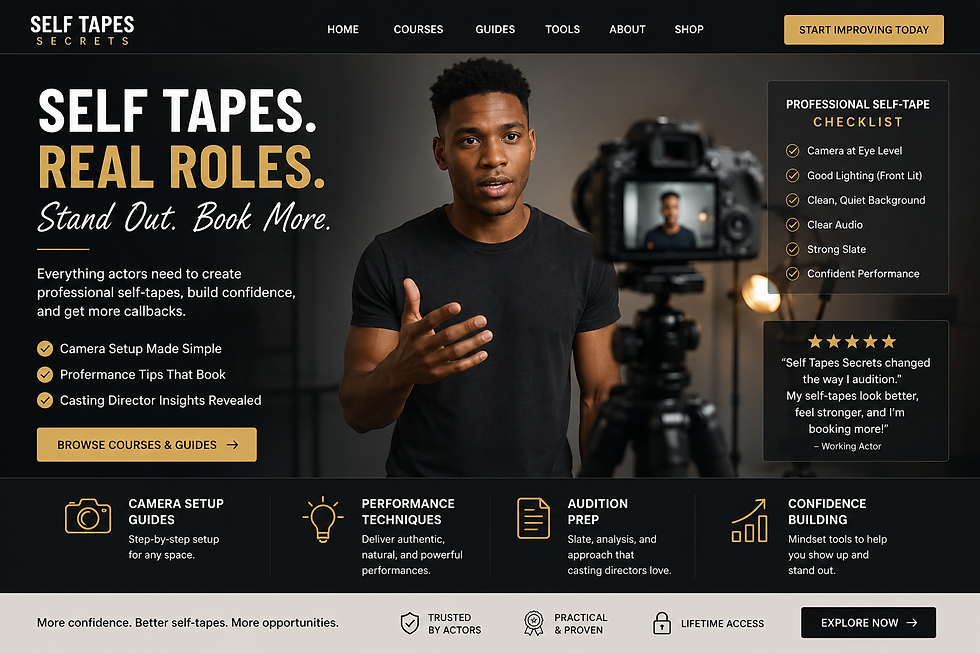
It is becoming the actor who can walk into a changing industry and confidently say: “Whatever the format is, I know how to make a character feel alive.”
That is the skill worth building and if you are currently working on becoming more confident on camera, improving your framing, mastering eyelines and creating self tapes that feel professional without losing authenticity, the Self Tape Audition guide is a practical next place to begin.
Not because one PDF will magically book you every role but because every strong career is built one clearer decision at a time.
Your next self tape could be the place where that preparation finally becomes visible.
“Free Self Tape Guide for Actors in Kenya — Fix Your Auditions Today”:


Comments